The words match the bench
Area, project, site, trade. Rename any of them. A firm that says “opening” instead of “area” should not be stuck with a painter’s vocabulary.
For joiners and site carpenters
Carpenters Invoices is the bench book for kitchen fitters, stair shops, first-fix crews, and one-van firms. Price the job, keep the balance, pay the bench, and take bank, PayPal, or Stripe.
The first invoice is free, even if you are not signed in. Pro is billed by Stripe.
Job ticket · sample
£1,220.00
Customer
Helen Ward
Work
Oak kitchen, Clifton Vale
Invoice
INV-184220 · part paid
Still to fit
Worktop, then the balance
Area, project, site, trade. Rename any of them. A firm that says “opening” instead of “area” should not be stuck with a painter’s vocabulary.
Speak a job, step through the questions, or fill one page. Save it, then email or WhatsApp it, before you subscribe. Pro is £12 a month after that.
Import contacts from the phone, a vCard, or a CSV. Name, number, email, and birthday land in the customer book.
Reports show what was collected, what is still owed, and what the crew is owed in wages. Week, month, or year.
Bank, sort code, account number, IBAN, SWIFT, PayPal, and your own Stripe link print on the invoice.
Newsletters, birthdays, Christmas, spring joinery, quote follow-ups, and balance reminders. One note, many addresses.
Why joiners trust this book
Generic invoice apps talk about line items. Mechanic books talk about bays and VINs. This one talks about openings, treads, sheet goods, and the balance still on the account. The sample firm is a joinery company, and every screen uses that language.
Pro
Keep writing invoices after the first one, and take another PDF whenever you need it. Simple is the day book. Professional adds the pipeline, the note list, wage reports, and the full record.
Customer, openings, hours, and the price. The spoken note becomes the bill.
One question at a time. The last card is the invoice, ready to send.
Name, address, labour, timber, VAT, and the balance, all on a single page.
A customer, a number, a project, and a trade on the same lead.
Rate times hours. Clocked time wins. Otherwise the rota is used.
Booked, on site, waiting on timber, ready to fit, handed over.
A notes app is fine for the first ten doors. It falls over the week someone is off, a client asks for the scribe photo, and three invoices are still open. The work is not complicated. The record is. You need the customer, the phone, the address, the opening, the timber, the hours, and what is still unpaid, in one place you can open on the doorstep.
Carpenters Invoices keeps that record as a book, not a dashboard full of empty charts. Simple mode is the day book: board, jobs, sites, invoices, customers, settings. Professional mode adds the pipeline, the note list, wage reports, expenses, the rota, and the office tools a firm uses once it has a crew.
The first invoice does not ask you to subscribe. Save one, print it or download the PDF, and see the bank details on it. If the book is useful, Pro is £12 a month and you can stop. If it is not, you have not paid for a trial that hid the invoice button.
A bill that gets paid names the site, the work, and how to pay. Labour and materials are separate lines, because a client disputes timber and a main contractor disputes hours — and CIS only bites the labour. VAT, if you are registered, sits on its own. The balance is the number in the largest type. Under it: account name, bank, sort code, account number, IBAN, SWIFT, a PayPal address, and your Stripe payment link. Customer money never lands in this website. Only the Pro membership does.
Most late balances are not disputes. They are a Friday invoice that sat in an inbox. The owed page lets you type a name, a phone, and an amount without building a spreadsheet. A CSV is there if the old book already lives in one. The note list can send the same balance note to everyone who still owes, with their own figure filled in, and it leaves from your mail app so the reply comes back to you.
A bench joiner on £22 an hour and a Saturday apprentice on £12 should not be reconstructed from memory at the end of the month. Clock in and out on the job, or rely on the rota. The wage report uses clocked hours when they exist, and the rota when they do not. Collected money, money still owed, and the wage bill sit next to each other so the week is obvious.
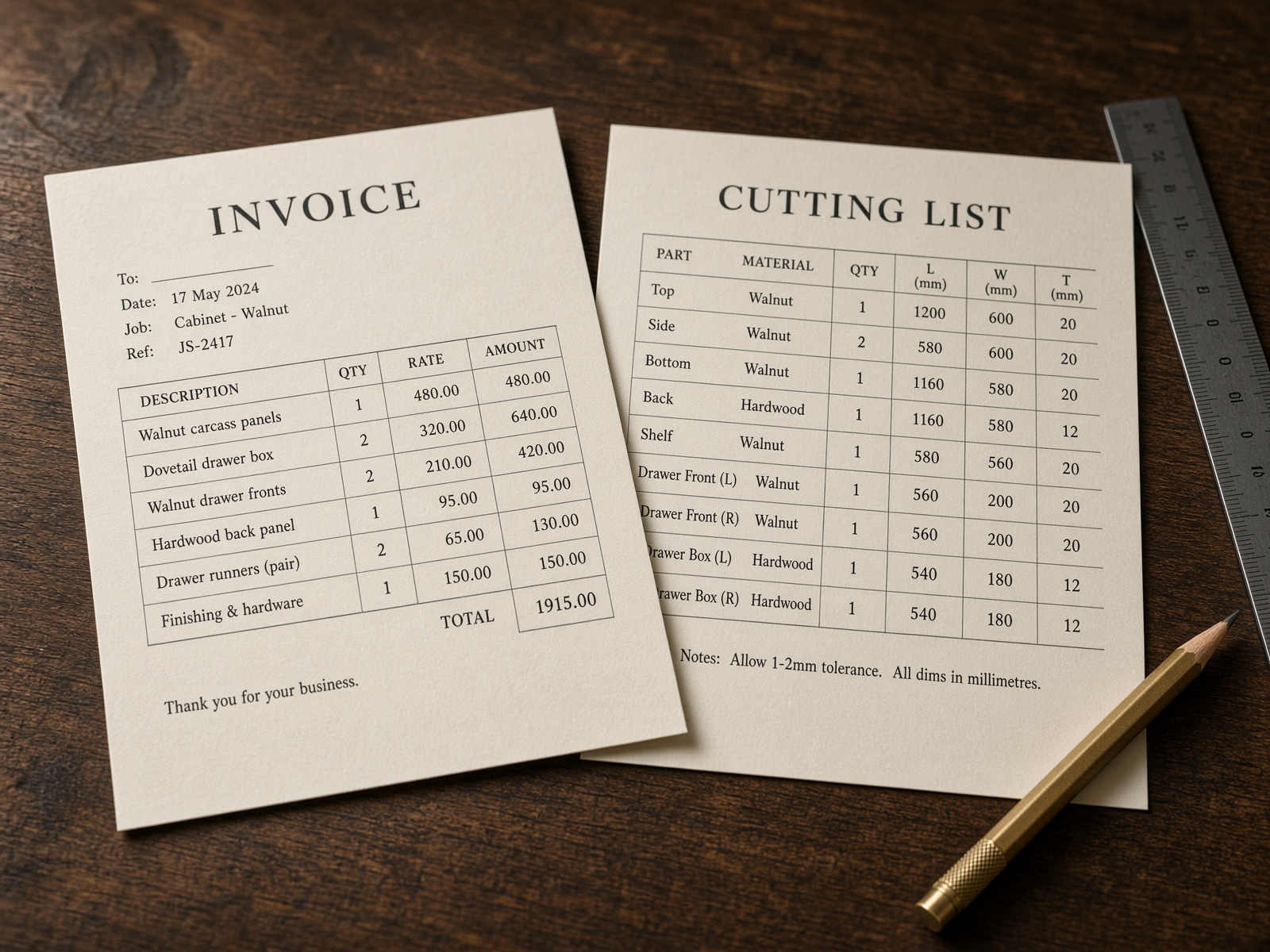
Stairs, skirting, sheet goods, stud walls, doors, decking, rafters, CIS, and what the crew costs this week.
Open the calculatorsOpen the book